

Contents
Ball valves are among the most widely used isolation valves in industrial steam, hot water, thermal oil, and process systems. Their quarter-turn operation, reliable shut-off performance, and low pressure drop make them suitable for both utility and production pipelines. However, because the valve body is typically made of carbon steel or stainless steel with a relatively large exposed surface area, it also becomes one of the primary points of heat loss within an insulated piping network.
When a ball valve is left uninsulated, heat continuously escapes from the valve body into the surrounding environment. This not only wastes thermal energy but also increases boiler load, fuel consumption, and the risk of accidental contact burns for maintenance personnel. During plant shutdowns, technicians often need to wait for valves to cool before inspection or servicing, extending maintenance time and reducing productivity.
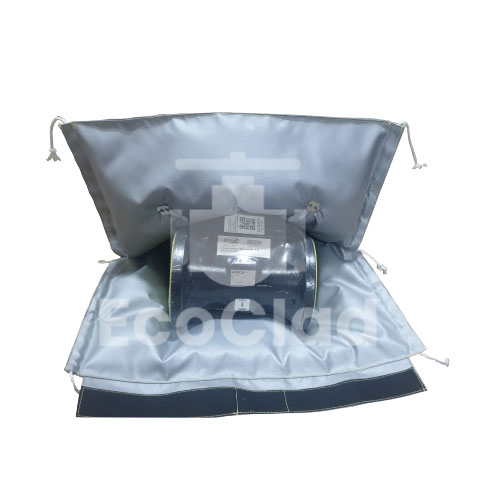
A removable insulation jacket provides an effective solution by minimizing heat loss while maintaining full access to the valve. EcoClad removable insulation jackets are engineered specifically for industrial ball valves, allowing operators to remove and reinstall the insulation repeatedly without damaging either the valve or the insulation system.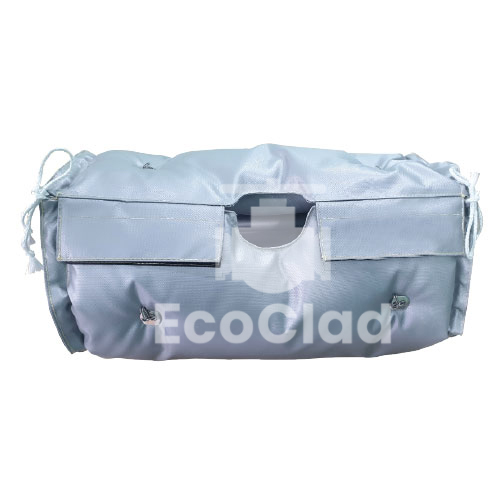
Learn more: About our solutions for heat insulation
What Is a Ball Valve and Why Does It Need Insulation?
Function of the equipment
A ball valve is a quarter-turn isolation valve that controls flow using a spherical ball with a central bore. Rotating the ball 90 degrees aligns or blocks the flow path, providing fast and reliable shut-off.
Ball valves are commonly installed on steam distribution lines, condensate systems, thermal oil loops, hot water networks, chemical process lines, and utility services. Depending on the application, they may operate continuously or cycle frequently during production.
Typical operating temperature
Industrial ball valves are commonly exposed to operating temperatures ranging from approximately 120°C to over 300°C, depending on the process medium and valve construction.
Typical operating conditions include:
- Steam systems with elevated pressure
- Thermal oil circulation
- Hot water distribution
- Condensate return systems
- Continuous or intermittent operating cycles
These conditions create a constant temperature difference between the valve surface and the surrounding air, making the valve a continuous source of thermal loss.
Why should you invest in insulation jackets? Are they important?
Why heat loss occurs
Heat escapes from an uninsulated ball valve through three simultaneous mechanisms.
Conduction transfers heat from the hot process fluid through the metal valve body.
Convection occurs as surrounding air absorbs heat from the valve surface and carries it away.
Radiation allows infrared energy to be emitted directly from the hot metal surface to nearby equipment and open space.
Because valves have thicker bodies, flanges, handles, and irregular geometries, they typically lose more heat than straight insulated pipe sections, making them priority insulation points.
Common Problems Caused by Uninsulated Ball Valves
Continuous heat loss
Every exposed ball valve acts as a localized heat emitter. Even when adjacent piping is insulated, an uncovered valve creates a thermal bridge that continuously releases energy.
The result includes:
- Higher energy loss
- Increased boiler firing rate
- Greater fuel consumption
- Reduced overall system efficiency
In facilities operating around the clock, the cumulative heat loss from dozens or hundreds of valves can become significant.
Personnel burn hazards
Surface temperatures on operating ball valves may exceed safe human contact limits.
Reducing accessible surface temperature is an important consideration in industrial safety programs and supports safer operation in accordance with workplace safety practices such as those referenced by OSHA guidance for hot surfaces.
Removable insulation jackets help reduce accidental contact risks in production and maintenance areas.
Higher ambient temperature
Heat released from multiple exposed valves increases the surrounding workspace temperature.
Higher ambient temperatures can:
- Reduce operator comfort
- Increase cooling requirements
- Create less favorable working conditions around process equipment
This effect becomes particularly noticeable in enclosed boiler rooms, utility plants, and production facilities.
Difficult maintenance
Maintenance personnel often cannot safely service an exposed hot valve immediately after shutdown.
Waiting for equipment to cool increases maintenance duration and may delay production schedules. A removable insulation jacket can be removed quickly for inspection and reinstalled after work is completed without replacing insulation materials.
ESG and carbon emissions
Reducing thermal losses directly improves energy efficiency.
Lower fuel consumption contributes to reduced greenhouse gas emissions while supporting facility objectives related to energy management, carbon reduction, and ESG performance without modifying the existing process equipment.
Engineering Design Considerations
Surface temperature
The insulation thickness should be selected to reduce external surface temperature while maintaining thermal performance under expected operating conditions.
Clearance requirements
Ball valves require sufficient clearance around the handle, actuator, adjacent piping, and nearby equipment. A properly engineered removable jacket fits within available installation space without interfering with operation.
Valve operation
The insulation should accommodate manual handles, gear operators, pneumatic actuators, or electric actuators while allowing unrestricted valve movement.
Inspection access
Frequent inspection, maintenance, and replacement are common requirements for isolation valves. Removable insulation enables rapid access without cutting or destroying the insulation system, reducing maintenance labor and waste.
Moisture protection
Outdoor or humid environments require outer fabrics that resist water penetration while preventing moisture accumulation inside the insulation. Proper fastening and sealing also help protect insulation performance over long operating periods.
Material selection
Material selection depends on operating temperature, mechanical durability, and environmental exposure. High-temperature insulation cores combined with abrasion-resistant outer fabrics provide reliable thermal performance while withstanding repeated installation cycles in industrial environments.
Applications
Removable insulation jackets for ball valves are suitable for facilities where thermal efficiency, operator safety, and maintainability are important.
Typical applications include:
- Steam generation and distribution systems
- Thermal oil heating systems
- Hot water process lines
- Chemical processing plants
- Food and beverage manufacturing
- Pharmaceutical production
- Textile factories
- Palm oil processing facilities
- Power generation plants
- Pulp and paper mills
They are particularly beneficial wherever valves require periodic inspection or replacement. Unlike permanent insulation, removable jackets allow maintenance personnel to access the valve quickly and reinstall the insulation immediately after servicing, maintaining consistent thermal performance throughout the equipment lifecycle.
Why Engineers Choose EcoClad
Engineers typically evaluate removable insulation based on technical performance rather than appearance.
EcoClad insulation jackets are custom engineered to match individual ball valve dimensions, ensuring consistent fit across manual and actuated valve configurations. Standardized manufacturing improves repeatable installation quality, helping maintenance teams achieve the same insulation performance after every removal and reinstallation.
High-temperature insulation materials are selected according to process operating conditions, while removable construction simplifies inspection, valve replacement, and preventive maintenance without generating unnecessary insulation waste.
Technical support includes insulation design based on valve geometry, operating temperature, and installation constraints, allowing facilities to integrate removable insulation into long-term energy efficiency and maintenance strategies.