

Contents
- 1 When Is a Removable Insulation Jacket the Right Solution for Steam Meters?
- 2 Engineering Design Considerations for Steam Meter Insulation Jackets
- 2.1 Every steam meter installation is different
- 2.2 Choosing the right insulation thickness
- 2.3 Instrument accessibility comes first
- 2.4 Built for industrial environments
- 2.5 Designed for repeated removal
- 2.6 Where Steam Meter Insulation Jackets Deliver the Highest Return
- 2.7 How Removable Insulation Jackets Improve Inspection and Maintenance
- 2.8 Quick access to measuring equipment
- 2.9 Reduced downtime
- 2.10 Longer insulation service life
- 3 Comparing Removable Insulation Jackets with Conventional Insulation
- 4 Selecting the Right Steam Meter Insulation Jacket
A steam meter is used to measure the amount of steam flowing through a piping system. It provides essential data for energy management, production monitoring, cost allocation, and process control. In many factories, steam meters are installed at boiler outlets, production lines, heat exchangers, and individual process equipment to monitor steam consumption accurately.
Although a steam meter is primarily a measuring device, it is usually installed on high-temperature steam pipelines. This means the meter body, flanges, and nearby fittings continuously release heat into the surrounding environment if they are left uninsulated. At the same time, technicians still need easy access to the meter for calibration, inspection, and maintenance. That’s why many facilities choose a Steam Meter Insulation Jacket instead of conventional insulation.
Unlike permanent insulation, which often has to be cut away during servicing, a removable insulation jacket can be opened and reinstalled quickly without damaging the insulation. This helps reduce energy loss while keeping the steam meter fully accessible whenever maintenance is required.
From EcoClad’s engineering experience, no two steam meter installations are exactly the same. Besides the pipe size, engineers also need to consider the flow meter body, transmitter, impulse lines, cable connections, supports, and surrounding piping to ensure the insulation fits properly without affecting measurement accuracy.
See Also: To optimize your plant’s thermal efficiency, read our guide on What Are Removable Insulation Jackets – Benefits, Applications & Why Ecoclad stands out.
When Is a Removable Insulation Jacket the Right Solution for Steam Meters?
A Steam Meter Insulation Jacket is the best choice whenever the steam meter operates at elevated temperatures and requires periodic inspection or calibration.
Steam meters need regular access
Unlike ordinary pipe fittings, steam meters are precision instruments.
Throughout their service life, technicians may need to:
- Perform calibration
- Verify measurement accuracy
- Inspect transmitters
- Check electrical connections
- Inspect flanges
- Replace sensors or electronic components
The insulation should allow these tasks to be completed quickly without being destroyed.
Why permanent insulation is inconvenient
Permanent insulation reduces heat loss, but it often becomes an obstacle during maintenance.
Typical problems include:
- Insulation must be cut open
- Difficult access to transmitters
- Higher maintenance costs
- Longer shutdown time
- Insulation cannot be reused
For steam meters that require scheduled calibration, removable insulation is usually the more practical solution.
Typical applications
Steam meter insulation jackets are widely used in:
- Boiler plants
- Steam distribution systems
- District heating networks
- Food and beverage factories
- Chemical plants
- Pharmaceutical manufacturing
- Textile mills
- Paper mills
- Power plants
- General industrial steam systems
Product Overview
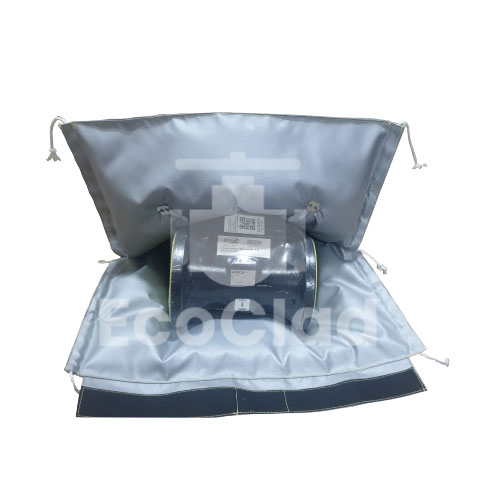
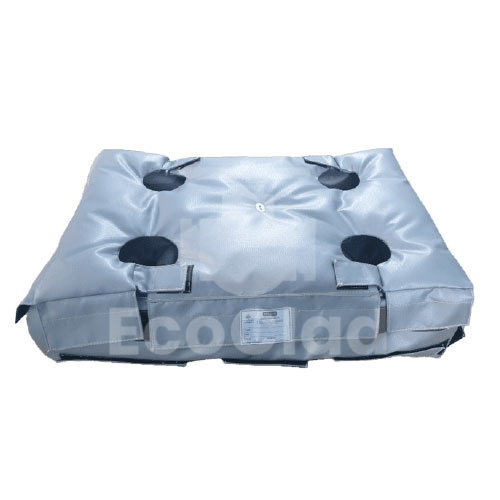
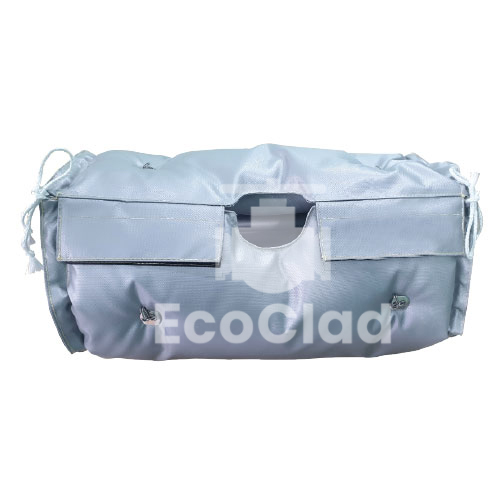
The Steam Meter Insulation Jacket is designed to reduce heat loss while allowing convenient access to the flow meter and all associated components.
Typical features include:
- Custom-made removable insulation design
- High-density Rockwool insulation
- Silicone-coated fiberglass outer fabric
- Water-resistant construction
- Suitable for steam and other high-temperature process systems
- Manufactured according to the actual steam meter configuration and installation layout
Instead of covering the entire assembly with one large insulation blanket, the jacket is usually divided into several removable sections. This makes it much easier to access the transmitter, display, wiring, or meter body without removing insulation from the surrounding pipeline.
Engineering Design Considerations for Steam Meter Insulation Jackets
Designing insulation for a steam meter requires careful attention to both thermal performance and instrument accessibility.
Every steam meter installation is different
Depending on the manufacturer and measurement technology, the installation may include:
- Vortex flow meters
- Orifice flow meters
- Differential pressure transmitters
- Ultrasonic flow meters
- Pressure transmitters
- Temperature sensors
- Electronic displays
Each configuration requires a different insulation layout.
Choosing the right insulation thickness
Insulation thickness depends on several factors, including:
- Steam temperature
- Surface temperature requirements
- Heat-loss reduction goals
- Available installation space
- Worker protection
For many industrial steam systems, a 50 mm insulation layer provides excellent thermal performance while keeping the assembly compact.
Instrument accessibility comes first
According to EcoClad engineers, one of the biggest mistakes is treating a steam meter like an ordinary pipe.
Before manufacturing the insulation jacket, engineers identify:
- Transmitter locations
- Display panels
- Cable entries
- Junction boxes
- Pressure tapping points
- Flange bolts
- Calibration access points
The insulation is then divided so these components remain accessible without removing the entire jacket.
Built for industrial environments
Steam meter installations are commonly exposed to:
- Steam leakage
- High humidity
- Dust
- Outdoor weather
- Mechanical vibration
- Oil mist
To improve durability, the outer layer is typically made from silicone-coated fiberglass fabric, which resists heat, moisture, and everyday industrial wear.
Designed for repeated removal
Calibration and inspection may be required several times during the equipment’s life.
For this reason, the insulation jacket uses fastening systems such as:
- Stainless steel springs
- Hook fasteners
- Industrial Velcro
- Buckles
- Lacing systems
These allow technicians to remove and reinstall the insulation quickly while maintaining a secure fit.
Pro Tip: “To drastically reduce heat loss and protect your staff, leverage the Benefits of Removable Insulation Jackets.”
Where Steam Meter Insulation Jackets Deliver the Highest Return
Steam meters are installed wherever accurate steam measurement is important for production and energy management.
Typical industries include:
- Boiler steam systems
- Steam distribution networks
- Food and beverage processing
- Chemical manufacturing
- Pharmaceutical production
- Textile industry
- Paper mills
- Power plants
- District heating systems
- General industrial utilities
Facilities with multiple steam meters can improve overall energy efficiency by insulating these measurement points while maintaining easy maintenance access.
How Removable Insulation Jackets Improve Inspection and Maintenance
One of the biggest advantages of removable insulation is that it makes instrument maintenance much easier.
Quick access to measuring equipment
Instead of cutting insulation away, technicians simply remove the insulation panel covering the meter.
This provides immediate access to:
- Transmitters
- Displays
- Sensors
- Wiring
- Flange connections
After maintenance, the insulation can be installed again within minutes.
Reduced downtime
Because the insulation is reusable, servicing takes less time.
This helps:
- Reduce labor costs
- Minimize production interruptions
- Speed up system restart
Longer insulation service life
Permanent insulation is often damaged every time the instrument is serviced.
A removable insulation jacket is designed specifically for repeated installation and removal, allowing it to maintain its thermal performance over many years.
Comparing Removable Insulation Jackets with Conventional Insulation
| Feature | Permanent Insulation | Removable Insulation Jacket |
|---|---|---|
| Maintenance | Must be cut and rebuilt | Easy to remove and reinstall |
| Heat-loss performance | Good | Excellent while maintaining instrument access |
| Lifecycle cost | Higher over time | Lower through repeated reuse |
| Worker safety | Protects hot surfaces | Protects hot surfaces while simplifying maintenance |
| Reusability | No | Yes |
| Typical service life | Shorter after repeated repairs | Long service life with proper maintenance |
For steam meters that require regular calibration or inspection, removable insulation generally provides better long-term value than permanent insulation.
Selecting the Right Steam Meter Insulation Jacket
A properly fitted insulation jacket starts with accurate equipment information.
Before requesting a custom design, engineers should prepare:
- Meter type
- Pipe size (DN)
- Operating temperature
- Steam pressure
- Photos of the installation
- Transmitter location
- Display position
- Available maintenance space
Common specification mistakes
Some of the most common issues include:
- Measuring only the pipe diameter
- Ignoring the transmitter dimensions
- Covering display panels
- Forgetting cable connections
- Not allowing enough maintenance clearance
Providing complete installation details helps ensure the insulation jacket fits correctly while keeping the measuring equipment fully accessible.