

Contents
- 1 When Is a Removable Insulation Jacket the Right Solution for Safety Valves?
- 2 Engineering Design Considerations for Safety Valve Insulation Jackets
- 3 Where Safety Valve Insulation Jackets Deliver the Highest Return
- 4 How Removable Insulation Jackets Improve Inspection and Maintenance
- 5 Comparing Removable Insulation Jackets with Conventional Insulation
- 6 Selecting the Right Safety Valve Insulation Jacket
When Is a Removable Insulation Jacket the Right Solution for Safety Valves?
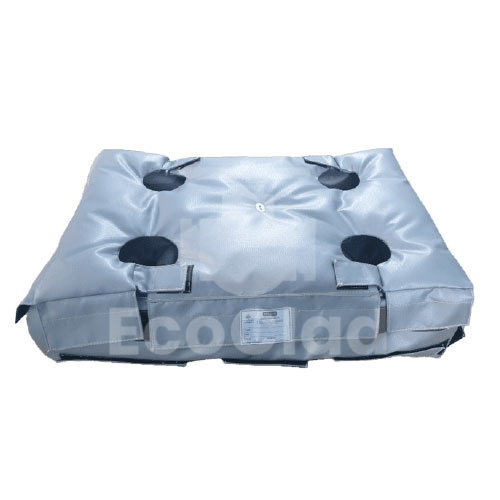
A Safety Valve Insulation Jacket is the best choice when you need to reduce heat loss without affecting the valve’s ability to operate, inspect, or undergo routine testing.
Why safety valves should remain accessible for inspection
Safety valves are critical safety devices that must remain easy to access at all times.
Routine maintenance may include:
- Visual inspections
- Pressure testing
- Calibration
- Set pressure verification
- Internal cleaning
- Valve replacement
- Certification inspections
A removable insulation jacket allows technicians to carry out these tasks without damaging the insulation.
Problems caused by permanent insulation
Permanent insulation often creates unnecessary maintenance challenges.
Common problems include:
- Insulation must be cut away during inspections
- Difficult access to the valve body
- Increased labor during maintenance
- Damaged insulation after servicing
- Higher long-term replacement costs
“Before upgrading your facility, you need to understand What Are Removable Insulation Jackets – Benefits, Applications & Why Ecoclad stands out.
Systems that benefit most from removable insulation jackets
Safety valve insulation jackets are commonly installed on:
- Steam boilers
- Steam headers
- Pressure vessels
- Thermal oil systems
- Hot water systems
- Heat exchangers
- Chemical processing equipment
- Food and beverage production lines
- Pharmaceutical process systems
- Power generation facilities
Engineering Design Considerations for Safety Valve Insulation Jackets
Every safety valve has unique dimensions and installation conditions, so insulation jackets should always be custom-made.
Valve type and configuration
The insulation jacket should fit the complete valve assembly, including:
- Valve body
- Bonnet
- Spring housing
- Flanges
- Inlet and outlet connections
- Discharge piping
- Test lever
- Nameplate location
The design should never interfere with the valve’s operation or maintenance.
Operating temperature and insulation thickness
The insulation system should be selected according to the operating conditions.
Typical EcoClad specifications include:
- Product name: Safety Valve Insulation Jacket
- Application: Thermal insulation for safety valves, pressure relief valves, and steam relief valves used in industrial heating systems
- Insulation material: Rockwool, density 80 kg/m³
- Insulation thickness: 50 mm
- Outer layer: Silicone-coated fiberglass fabric
- Water resistance: Yes
- Maximum operating temperature: Up to 260°C
- Higher temperature designs: Available upon specific technical requirements
- Design: Removable insulation jacket
- Manufacturing: Custom-made according to the actual valve dimensions and installation configuration
Clearance for maintenance and replacement
From our engineering experience, the available maintenance space often has a greater influence on the insulation design than the valve size itself.
The insulation jacket should allow technicians to:
- Remove the valve
- Access flange bolts
- Operate the test lever
- Read the valve nameplate
- Perform calibration
without removing nearby insulation.
Moisture and environmental protection
Safety valves are commonly installed in environments exposed to:
- Steam
- Rainwater
- Condensation
- Dust
- Outdoor weather
- Chemical vapors
The silicone-coated fiberglass outer layer helps protect the insulation material and improves long-term durability.
Selecting fastening systems for repeated removal
Because safety valves require periodic inspection, the fastening system should allow quick removal without losing strength after repeated use.
Depending on the application, EcoClad may use:
- Stainless steel hooks
- Buckles
- High-temperature straps
- Lacing wire
- Industrial hook-and-loop fasteners
Each fastening system is selected according to the valve size and maintenance schedule.
Where Safety Valve Insulation Jackets Deliver the Highest Return
The greatest benefits are found in high-temperature systems where safety valves are inspected regularly.
Steam boiler systems
Reduce heat loss while keeping safety valves fully accessible for testing.
Steam distribution networks
Improve energy efficiency at pressure relief points.
Pressure vessels
Maintain insulation while simplifying routine inspections.
Thermal oil systems
Reduce radiant heat from high-temperature safety valves.
Heat exchangers
Support thermal efficiency without affecting maintenance access.
Chemical plants
Provide reusable insulation for critical pressure protection equipment.
Food and beverage processing
Support hygienic maintenance while reducing heat loss.
Pharmaceutical manufacturing
Improve thermal efficiency in clean process systems.
Textile industry
Reduce energy loss in steam-heated production equipment.
Power plants
Protect personnel from hot surfaces while maintaining easy access for inspection and certification.
How Removable Insulation Jackets Improve Inspection and Maintenance
One of the biggest advantages of removable insulation is that it supports maintenance instead of slowing it down.
Can the safety valve be inspected without damaging the insulation?
Yes.
The insulation jacket can be removed in just a few minutes, allowing technicians to inspect, test, or replace the valve before reinstalling the insulation.
Reducing maintenance time
Quick removal reduces shutdown time and minimizes labor during routine inspections.
Supporting routine inspection and replacement
Pressure testing, certification, calibration, and valve replacement can all be completed without replacing the insulation.
Preventing insulation damage during servicing
Unlike permanent insulation, removable jackets are designed to be reused after every maintenance cycle, helping maintain consistent thermal performance throughout the valve’s service life.
Comparing Removable Insulation Jackets with Conventional Insulation
| Feature | Permanent Insulation | Removable Insulation Jacket |
|---|---|---|
| Maintenance | Must be cut away for inspection | Easy to remove and reinstall |
| Heat Loss | Performance often decreases after maintenance | Consistent thermal insulation |
| Lifecycle Cost | Higher replacement costs | Lower long-term ownership cost |
| Worker Safety | Hot surfaces may become exposed | Continuous thermal protection |
| Reusability | No | Yes |
| Typical Service Life | Depends on maintenance damage | Long service life with repeated reuse |
Selecting the Right Safety Valve Insulation Jacket
Choosing the correct insulation jacket begins with understanding both the valve and the operating conditions.
Equipment model and connection type
Useful information includes:
- Valve manufacturer
- Valve model
- Valve size
- Pressure class
- Flange standard
- Inlet and outlet dimensions
- Test lever location
Operating pressure and temperature
These determine the insulation material, jacket construction, and insulation thickness.
Required inspection frequency
Safety valves that undergo regular testing should use fastening systems designed for repeated removal.
Choosing insulation materials
Material selection depends on:
- Surface temperature
- Operating environment
- Moisture exposure
- Mechanical durability
- Required insulation performance
Information engineers should prepare before requesting a custom design
For the most accurate insulation jacket, prepare:
- Valve drawings if available
- Valve dimensions
- Operating temperature
- Photos of the installation
- Clearance around the valve
- Required insulation thickness
- Nearby equipment layout
Common specification mistakes
Some common design mistakes include:
- Measuring only the valve body
- Ignoring the spring housing
- Covering the test lever
- Forgetting flange bolt access
- Not allowing enough clearance for valve removal
A properly designed insulation jacket should reduce heat loss without affecting the safety valve’s operation or inspection requirements.
Pro Advice: “Upgrade your piping system today and reap the Benefits of Removable Insulation Jackets.”