

Contents
- 1 When Is a Removable Insulation Jacket the Right Solution for Rubber Tire Molds?
- 1.1 Why Rubber Tire Molds Should Remain Accessible
- 1.2 Problems Caused by Permanent Insulation
- 1.3 Systems That Benefit Most from Removable Rubber Tire Mold Insulation
- 1.4 Engineering Design Considerations for Rubber Tire Mold Insulation Jackets
- 1.5 Equipment Type and Mold Configuration
- 1.6 Operating Temperature and Insulation Thickness
- 1.7 Clearance for Maintenance and Mold Replacement
- 1.8 Moisture and Environmental Protection
- 1.9 Selecting Fastening Systems for Repeated Removal
- 2 Where Rubber Tire Mold Insulation Jackets Deliver the Highest Return
- 3 How Removable Insulation Jackets Improve Inspection and Maintenance
- 4 Comparing Removable Insulation Jackets with Conventional Insulation
- 5 Selecting the Right Rubber Tire Mold Insulation Jacket
- 6 Equipment Model and Connection Type
- 7 Operating Pressure and Temperature
- 8 Required Inspection Frequency
- 9 Choosing Insulation Materials
- 10 Information Engineers Should Prepare Before Requesting a Custom Design
- 11 Common Specification Mistakes
Rubber tire molds operate under high temperatures and repeated heating cycles to shape and cure tires with consistent quality. Because molds must be opened frequently for cleaning, inspection, maintenance, and replacement, conventional permanent insulation often becomes a maintenance obstacle. Every time rigid insulation is removed, it is typically damaged and must be replaced, increasing maintenance costs and production downtime.
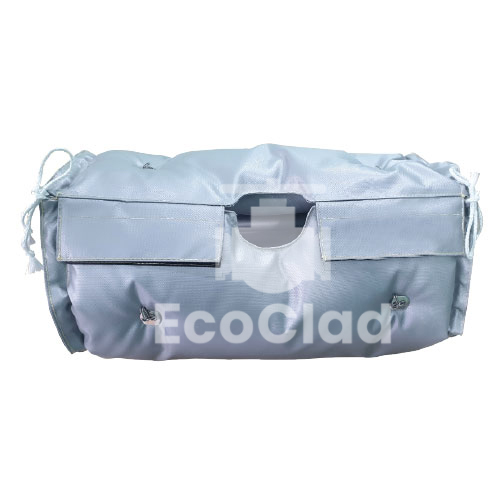
A Rubber Tire Mold Insulation Jacket provides an effective alternative by combining thermal insulation with quick accessibility. Unlike fixed insulation, removable jackets can be detached and reinstalled repeatedly without damaging the insulation layer, allowing technicians to access the mold whenever necessary.
These insulation jackets are commonly used in tire manufacturing lines heated by steam, thermal oil, or electric heating systems where stable mold temperature directly influences curing quality, energy consumption, and production efficiency.
From EcoClad engineers’ experience, an effective insulation jacket should never be designed solely from mold dimensions. The geometry of the mold, opening mechanisms, maintenance procedures, piping arrangements, and available installation space all influence the final design to ensure both thermal performance and easy servicing.
Learn more about our: Benefits of Insulation Jackets
When Is a Removable Insulation Jacket the Right Solution for Rubber Tire Molds?
A Rubber Tire Mold Insulation Jacket is the preferred solution whenever the mold requires regular inspection, cleaning, or replacement while maintaining high thermal efficiency.
Why Rubber Tire Molds Should Remain Accessible
Unlike many static process vessels, tire molds require routine access throughout their operating life.
Typical maintenance includes:
- Mold cleaning
- Surface polishing
- Pattern inspection
- Alignment verification
- Mold replacement
- Heating system inspection
A removable insulation system allows these procedures without destroying the insulation.
Problems Caused by Permanent Insulation
Permanent insulation often creates operational challenges such as:
- Difficult access to mold components
- Damaged insulation after maintenance
- Higher replacement costs
- Longer production downtime
- Reduced insulation performance after repeated repairs
In high-volume tire manufacturing, these issues accumulate into significant operating expenses.
Systems That Benefit Most from Removable Rubber Tire Mold Insulation
Removable insulation jackets are especially beneficial for:
- Steam-heated tire curing presses
- Thermal oil curing systems
- Large truck tire molds
- OTR (Off-The-Road) tire production
- Retreading equipment
- Rubber vulcanizing presses
Engineering Design Considerations for Rubber Tire Mold Insulation Jackets
Designing a Rubber Tire Mold Insulation Jacket requires understanding both thermal engineering and maintenance requirements.
Equipment Type and Mold Configuration
Rubber tire molds vary considerably depending on:
- Two-piece molds
- Segment molds
- Container molds
- Bladder curing presses
- Large-diameter industrial tire molds
Each configuration requires different insulation panel layouts and removable sections.
Operating Temperature and Insulation Thickness
Insulation thickness is selected according to operating conditions rather than using one standard specification.
Design considerations include:
- Steam temperature
- Thermal oil temperature
- Surface temperature targets
- Heat-loss reduction goals
- Worker protection requirements
Proper insulation minimizes radiant heat while maintaining stable curing temperatures.
Clearance for Maintenance and Mold Replacement
According to EcoClad engineering experience, installation clearance often has a greater impact on insulation design than the overall size of the mold itself.
Engineers evaluate:
- Mold opening direction
- Clamp locations
- Lifting points
- Hydraulic cylinder movement
- Maintenance access
- Surrounding equipment
These factors determine where removable insulation panels should be divided.
Moisture and Environmental Protection
Industrial tire plants expose insulation to:
- Steam
- Oil mist
- Dust
- Carbon black
- Cleaning chemicals
Therefore, the insulation jacket typically incorporates:
- Silicone-coated fiberglass fabric
- Moisture-resistant construction
- Durable stitched seams
- Reinforced edges
- High-temperature sewing threads
Selecting Fastening Systems for Repeated Removal
Since insulation may be removed hundreds of times during its service life, fastening systems must remain reliable.
Common fastening methods include:
- Stainless steel hooks
- Spring fasteners
- Lacing systems
- Industrial Velcro
- Buckles
- Adjustable straps
The appropriate fastening method depends on maintenance frequency and operating environment.
Where Rubber Tire Mold Insulation Jackets Deliver the Highest Return
Although designed specifically for tire molds, similar removable insulation concepts provide value across many thermal processes.
Typical industries include:
Boiler Steam Systems
Steam-powered curing systems with extensive heat distribution networks.
Heat Exchangers
Equipment requiring regular inspection while maintaining thermal efficiency.
Steam Distribution Networks
Valves, fittings, and process equipment requiring removable insulation.
Thermal Oil Systems
High-temperature heating systems serving curing presses.
Hot Water Systems
Industrial heating loops operating at moderate temperatures.
Food and Beverage Processing
Processing equipment requiring routine sanitation.
Chemical Plants
Reactors and process equipment with frequent maintenance schedules.
Pharmaceutical Manufacturing
Clean-process equipment requiring removable insulation for inspections.
Textile Industry
Steam-heated dyeing and finishing equipment.
Power Plants
Steam equipment requiring periodic maintenance while minimizing energy loss.
How Removable Insulation Jackets Improve Inspection and Maintenance
Maintenance efficiency is often the primary reason manufacturers choose removable insulation.
Can the Mold Be Inspected Without Removing the Entire Insulation?
Yes.
Well-designed insulation jackets allow technicians to remove only the required insulation section while leaving the remaining panels in place.
This minimizes heat loss during inspection.
Reducing Maintenance Time
Quick-removal insulation significantly shortens maintenance activities by eliminating the need to cut and reinstall conventional insulation.
This reduces machine downtime and helps production resume more quickly.
Supporting Routine Inspection and Mold Replacement
Routine maintenance becomes simpler because technicians can:
- Remove insulation rapidly
- Inspect mold surfaces
- Replace worn components
- Reinstall insulation immediately
No new insulation materials are required after each service.
Preventing Insulation Damage During Servicing
Because each insulation panel is designed for repeated removal, the insulation retains its original thermal performance throughout multiple maintenance cycles.
Comparing Removable Insulation Jackets with Conventional Insulation
| Feature | Permanent Insulation | Removable Insulation Jacket |
|---|---|---|
| Maintenance | Must be cut open | Easily removed and reinstalled |
| Heat Loss | Good initially | Excellent with proper fit |
| Lifecycle Cost | Higher due to replacement | Lower through repeated reuse |
| Safety | Surface protection only | Surface protection with maintenance accessibility |
| Reusability | No | Yes |
| Typical Service Life | Reduced after repeated repairs | Long service life with routine maintenance |
For equipment requiring regular access, removable insulation generally provides a lower total cost of ownership despite a higher initial investment.
Selecting the Right Rubber Tire Mold Insulation Jacket
Selecting the proper insulation jacket requires more than measuring the mold diameter.
Equipment Model and Connection Type
Engineers should identify:
- Mold model
- Press manufacturer
- Heating method
- Steam connections
- Hydraulic connections
- Instrument locations
Operating Pressure and Temperature
Thermal conditions determine:
- Insulation material
- Thickness
- Outer fabric
- Fastening system
Higher temperatures generally require heavier-duty construction materials.
Required Inspection Frequency
Equipment requiring weekly maintenance may benefit from different fastening systems than equipment serviced only during annual shutdowns.
Maintenance schedules directly influence insulation design.
Choosing Insulation Materials
Typical insulation materials include:
- Rockwool
- Fiberglass
- Ceramic fiber (for higher temperatures)
Outer protection commonly uses silicone-coated fiberglass fabric because of its durability and resistance to industrial environments.
Information Engineers Should Prepare Before Requesting a Custom Design
To ensure an accurate custom design, it is helpful to provide:
- Equipment drawings
- Mold dimensions
- Operating temperature
- Heating medium
- Photographs from multiple angles
- Maintenance access requirements
- Installation space limitations
The more complete the information, the better the final insulation fit.
Common Specification Mistakes
Common design errors include:
- Selecting insulation thickness without considering maintenance clearance
- Ignoring moving mold sections
- Overlooking hydraulic or steam piping
- Using unsuitable fastening systems
- Measuring only external dimensions without considering operating movement
Avoiding these mistakes improves both installation quality and long-term reliability.