

Contents
- 1 When Is a Removable Insulation Jacket the Right Solution for Pipe Elbows?
- 2 Product Overview
- 3 Engineering Design Considerations for Pipe Elbow Insulation Jackets
- 4 Where Pipe Elbow Insulation Jackets Deliver the Highest Return
- 5 How Removable Insulation Jackets Improve Inspection and Maintenance
- 6 Comparing Removable Insulation Jackets with Conventional Insulation
- 7 Selecting the Right Pipe Elbow Insulation Jacket
Pipe elbows are one of the most common fittings in industrial piping systems. They change the direction of flow and are found in steam pipelines, hot water systems, thermal oil circuits, chemical processing plants, and many other high-temperature applications. Although elbows are relatively small compared to long pipe sections, they are often one of the largest sources of heat loss because of their curved shape and larger exposed surface area.
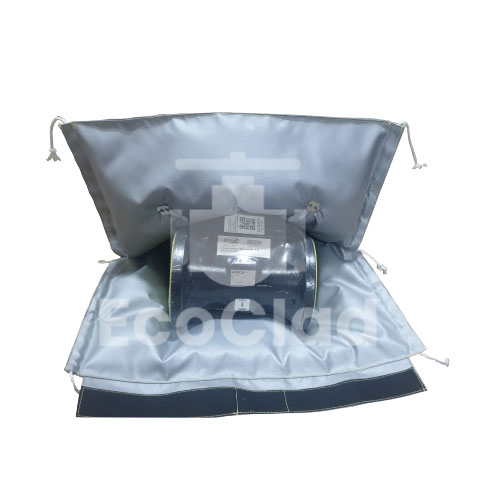
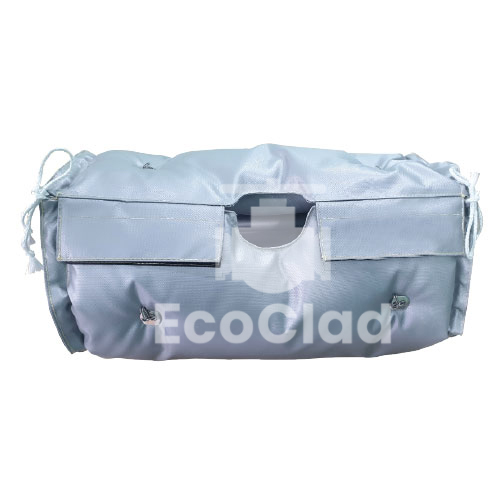
Insulating straight pipes is usually straightforward, but insulating elbows can be much more challenging. Conventional insulation often leaves gaps, becomes compressed around bends, or has to be cut apart during maintenance. A Pipe Elbow Insulation Jacket solves these problems by providing a custom-fit insulation system that follows the elbow’s geometry while remaining easy to remove and reinstall.
From EcoClad’s engineering experience, every pipe elbow is different. The elbow angle, pipe diameter, insulation thickness, nearby flanges, valves, and available installation space all affect the final design. Instead of using universal covers, each insulation jacket is manufactured to fit the actual elbow and surrounding piping configuration.
» Learn more: Benefits of removable insulation jackets
When Is a Removable Insulation Jacket the Right Solution for Pipe Elbows?
A Pipe Elbow Insulation Jacket is the ideal solution whenever pipe elbows operate at elevated temperatures and need reliable insulation without making maintenance more difficult.
Why pipe elbows need insulation
Heat loss does not occur only along straight pipes. Elbows are often responsible for disproportionate energy loss because they have:
- Larger external surface area
- Complex curved geometry
- More joints between insulation sections
- Higher exposure to air circulation
Proper insulation helps reduce these losses while lowering the external surface temperature to improve worker safety.
Problems with conventional insulation
Traditional insulation works reasonably well on straight pipe runs but becomes more difficult around bends.
Common issues include:
- Poor fit around curved sections
- Gaps between insulation pieces
- Compressed insulation reducing thermal performance
- Difficult removal during maintenance
- Frequent replacement after servicing
A removable insulation jacket avoids these problems by fitting the elbow precisely.
Typical applications
Pipe elbow insulation jackets are commonly used in:
- Steam piping systems
- Thermal oil pipelines
- Hot water distribution
- Chemical process piping
- Food processing plants
- Pharmaceutical facilities
- Textile factories
- Power plants
- Refineries
- General industrial heating systems
More about: Removable insulation jackets application
Product Overview
The Pipe Elbow Insulation Jacket is designed to reduce heat loss while allowing easy removal whenever maintenance or pipe modifications are required.
Typical specifications include:
- Application: Thermal insulation for pipe elbows, bends, and curved sections in steam, hot water, thermal oil, and industrial piping systems
- Insulation material: Rockwool, density 80 kg/m³
- Insulation thickness: 50 mm
- Outer layer: Silicone-coated fiberglass fabric
- Water resistance: Yes
- Maximum operating temperature: Up to 260°C
- Design: Removable insulation jacket
- Manufacturing: Custom-made according to the elbow angle, pipe diameter, insulation thickness, and installation layout
Because every piping system is different, each insulation jacket is manufactured to match the actual elbow dimensions and surrounding pipe arrangement.
Engineering Design Considerations for Pipe Elbow Insulation Jackets
Although a pipe elbow looks simple, designing an insulation jacket that fits properly requires careful planning.
Elbow configuration affects the design
Engineers first identify the elbow configuration, including:
- 45° elbows
- 90° elbows
- Long-radius elbows
- Short-radius elbows
- Reducing elbows
- Welded elbows
Different geometries require different insulation panel designs to achieve a close fit.
Choosing the right insulation thickness
Insulation thickness depends on several operating conditions, including:
- Process temperature
- Heat-loss reduction target
- Surface temperature requirements
- Available installation space
For many industrial applications, a 50 mm Rockwool insulation layer provides an excellent balance between thermal performance and ease of installation.
Nearby equipment is just as important
According to EcoClad engineers, one of the biggest design mistakes is measuring only the elbow itself.
Before manufacturing the jacket, engineers also check:
- Nearby flanges
- Adjacent valves
- Pipe supports
- Expansion joints
- Instrument connections
- Clearance around surrounding equipment
These details determine how the insulation jacket is divided into removable sections.
Built for industrial conditions
Pipe elbows often operate in environments exposed to:
- Steam
- Rain
- High humidity
- Dust
- Oil mist
- Outdoor weather
For this reason, the outer layer is commonly made from silicone-coated fiberglass fabric, providing excellent resistance to heat, moisture, and daily industrial use.
Designed for repeated removal
Maintenance activities such as valve replacement, pipe inspection, or flange servicing may require insulation to be removed regularly.
To support repeated use, insulation jackets typically use durable fastening systems including:
- Stainless steel springs
- Hook fasteners
- Industrial Velcro
- Buckles
- Lacing systems
These fastening methods allow quick installation while maintaining a secure fit.
Where Pipe Elbow Insulation Jackets Deliver the Highest Return
Pipe elbows are found throughout industrial piping systems, making them one of the most common applications for removable insulation.
Typical industries include:
- Boiler steam systems
- Steam distribution networks
- Thermal oil systems
- Hot water systems
- Food and beverage processing
- Chemical plants
- Pharmaceutical manufacturing
- Textile industry
- Power plants
- Oil and gas facilities
Because piping systems often contain hundreds of elbows, insulating these components can significantly improve the overall energy efficiency of the plant.
How Removable Insulation Jackets Improve Inspection and Maintenance
One major advantage of removable insulation is easier access during maintenance.
Faster maintenance
Instead of cutting insulation away, technicians simply remove the jacket, complete the work, and reinstall it afterward.
This is especially useful when servicing nearby valves, flanges, or expansion joints.
Reduced downtime
Since the insulation is reusable, there is no need to rebuild insulation after every maintenance activity.
This helps:
- Reduce labor costs
- Shorten shutdown time
- Return the system to operation more quickly
Longer insulation service life
Conventional insulation is often damaged each time maintenance is performed.
Removable insulation jackets are designed specifically for repeated installation and removal, allowing them to maintain their thermal performance for many years.
Comparing Removable Insulation Jackets with Conventional Insulation
| Feature | Permanent Insulation | Removable Insulation Jacket |
|---|---|---|
| Maintenance | Must be cut and replaced | Easy to remove and reinstall |
| Heat-loss performance | Good | Excellent with custom-fit design |
| Lifecycle cost | Higher due to repeated replacement | Lower through long-term reuse |
| Worker safety | Reduces hot surface exposure | Improves safety while maintaining accessibility |
| Reusability | No | Yes |
| Typical service life | Reduced after repeated repairs | Long service life with proper maintenance |
For industrial piping systems requiring regular inspection, removable insulation usually provides a lower total cost over its operating life.
Selecting the Right Pipe Elbow Insulation Jacket
A properly designed insulation jacket begins with accurate engineering information.
Before requesting a quotation, engineers should prepare:
- Pipe diameter
- Elbow angle
- Operating temperature
- Process medium
- Existing insulation thickness (if applicable)
- Photos of the installation
- Clearance around nearby equipment
Common specification mistakes
Some of the most common design problems include:
- Measuring only the pipe diameter
- Ignoring the elbow radius
- Forgetting nearby flanges or valves
- Not considering maintenance access
- Selecting insulation thickness without checking available space
Providing complete installation details allows the insulation jacket to fit correctly and perform as intended.